
Hard shell or soft suitcase: what to choose for a flight
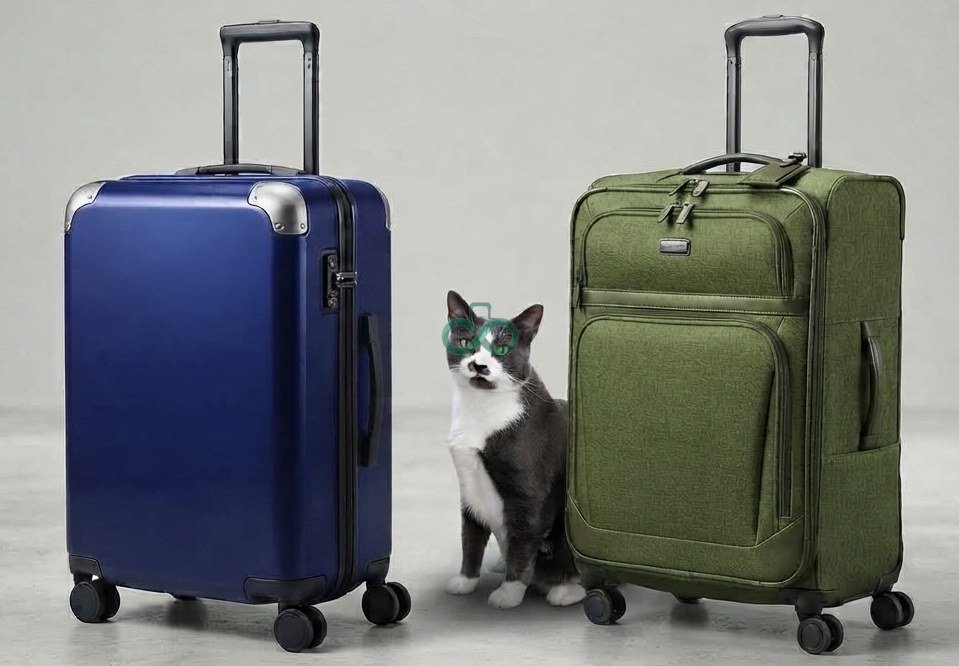
In short: a hard-shell suitcase protects fragile things better and does not mind rain. A soft one squeezes into the overhead bin and the size frame more easily, has outside pockets and can be expanded. For frequent flights with checked baggage we recommend hard-shell; for cabin baggage and road trips, soft.
This is probably the question we are asked most often. And the honest answer is that there is no perfect option — there is one that suits the way you travel.
When to choose hard-shell. If you check the suitcase in and you are carrying a bottle of wine, cosmetics in glass, souvenirs or electronics, a hard shell is simply more reliable. Baggage handlers at airports are not always careful, and a soft suitcase at the bottom of a stack can be squashed. Another plus is moisture: if the suitcase stands in the rain on the apron, everything inside stays dry.
There are downsides too. A hard-shell suitcase opens into two halves, and in a cramped hotel room it needs space. Scratches appear quickly on a glossy surface. And it hardly expands: if you bought too much on the trip, you will have to look for another bag.
When to choose soft. A soft suitcase forgives a lot. It compresses a little, so it goes through the cabin-baggage frame and into the overhead bin more easily. Outside pockets are very handy for documents, a charger and a jacket. Many models expand on a zip — a help on the way back.
But fabric soaks up dirt, can get wet and will not protect fragile things as well.